Go beyond the headlines with Reuters on the stories shaping the day. Subscribe for $1/week. Subscribe now.
|
|
|
|
|
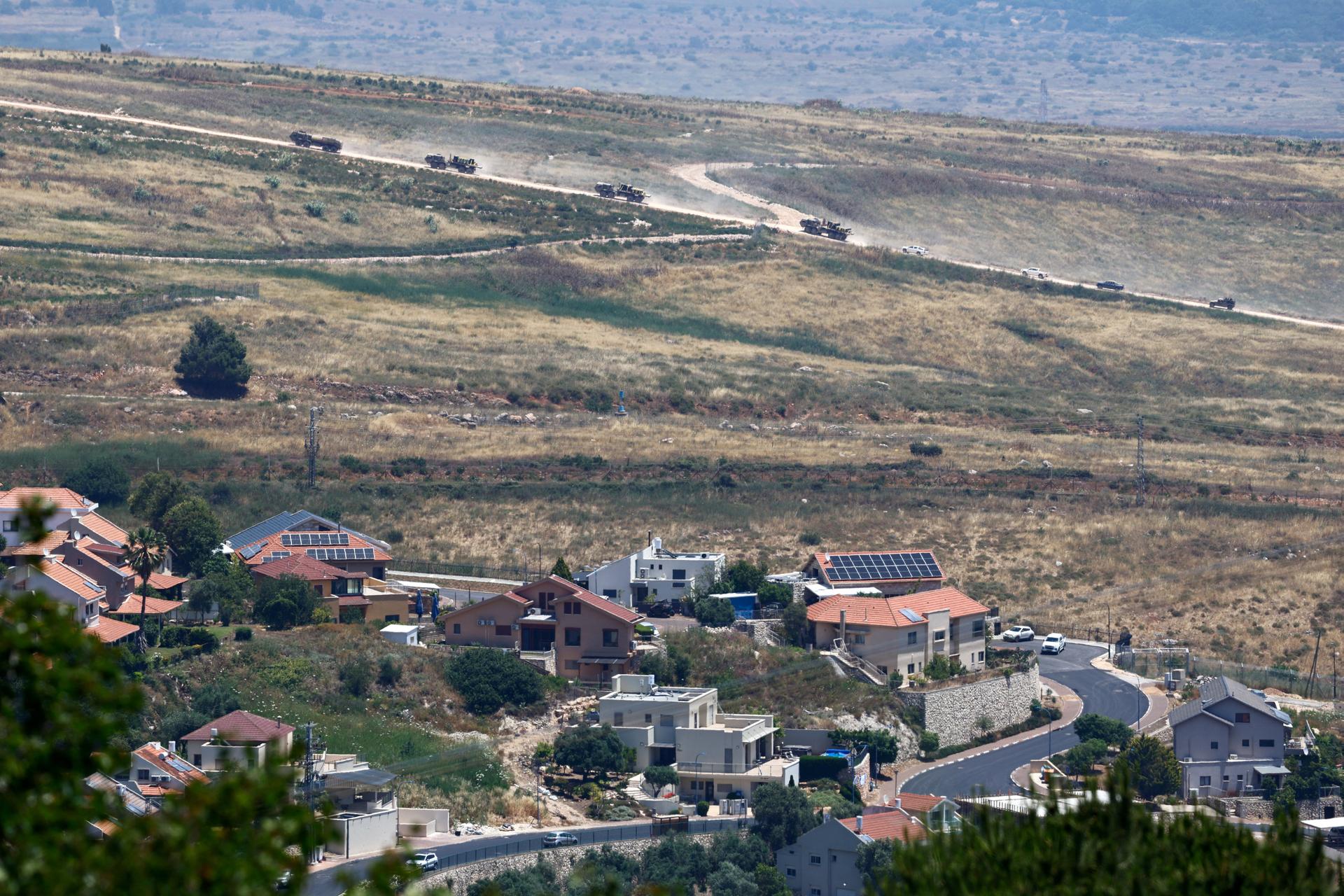
An Israeli military convoy manoeuvres in Lebanon, near the town of Metula located on the Israeli side of the border, June 1, 2026. REUTERS/Amir Cohen
|
|
|
|
|
- European luxury brands have sharpened their focus on the United States, with a surge of store openings and fashion shows to lure a new crop of wealthy shoppers enriched by the AI and tech boom and offset weak consumer confidence in the rest of the world.
- AI giant Anthropic has confidentially filed for a US initial public offering, the company said, edging ahead of rival OpenAI in a closely watched race to reach public markets.
- Nvidia CEO Jensen Huang said the company has enough supply to accommodate robust growth in central processing units and graphics processing units as it rides an AI boom.
- Jeremy Grantham’s investment firm GMO made its name betting against the mania of the late 1990s and the mid-2000s housing boom. In this episode of The Big View podcast, he tells Peter Thal Larsen how artificial intelligence has forced Big Tech firms into a fight to the death.
- The US fund management industry has thrown its weight behind a proposal to open up retirement plans to alternative assets like private credit and cryptocurrencies to direct a slice of the estimated $14.2 trillion now in 401(k) and other mass-market products into those vehicles.
|
|
|
|
|
Customers dine at a restaurant in a shopping area of Beijing, China July 25, 2022. REUTERS/Tingshu Wang/File Photo
|
On the stone steps leading up Mount Tai, one of China’s best-known peaks, hikers can book and pay for "climbing buddies" to walk with them, carry bags and take photos for a few hundred yuan.
The increasingly popular service is part of a broader “companionship economy” emerging in China, which includes paid partners for running, sightseeing and even eating out at hotpot restaurants – a meal traditionally shared with friends.
While there is no official data about the size of the companion economy, estimates cited by state media said it was worth around $7.4 billion in 2025.
|
|
|
|
This illustration shows magnetic activity in an exoplanet that is a gas giant like Jupiter. Released on June 2, 2026. ESO/M. Kornmesser, L. Calcada/Handout via REUTERS
|
Based on the behavior of winds on seven large and hot gas exoplanets, astronomers have obtained the strongest evidence to date that planets beyond our solar system possess magnetic fields, like Earth and five other planets in our solar system.
The finding, based on observations by telescopes in Chile and Hawaii, deepens the understanding of exoplanets by showing that at least some share an important characteristic present in all but two of the solar system's eight planets. A magnetic field is an invisible force field generated by the movement of electrically conducting material deep inside a planet - a molten metal core - combined with the planet's rotation.
|
|
|
|
|
|
| |
|
|
Reuters Daily Briefing is sent 5 days a week. Think your friend or colleague should know about us? Forward this newsletter to them. They can also sign up here. Want to stop receiving this email? Unsubscribe here. To manage which newsletters you're signed up for, click here. This email includes limited tracking for Reuters to understand whether you’ve engaged with its contents. For more information on how we process your personal information and your rights, please see our Privacy Statement. Terms & Conditions |
|
| |
© 2026 Thomson Reuters. All rights reserved.
3 Times Square, New York, NY 10036 |
|
|
|
|
|








没有评论:
发表评论